1540 E. Maryland Ave., Suite 100B
Phoenix, AZ 85014

Call For Your 30 Min Case Evaluation
1540 E. Maryland Ave., Suite 100B
Phoenix, AZ 85014
Call For Your 30 Min Case Evaluation
When someone you love is in jail, the first questions are usually practical: Where are they? How can you speak with them? What will it take to get them home? Knowing where to start can make a stressful situation easier to manage.
This Maricopa County jail guide answers 16 common questions about inmate searches, visits, GTL and GettingOut, bond, release and everyday needs in custody. Whether the arrest happened in Phoenix, Mesa, Glendale, Scottsdale, Tempe or another nearby community, these answers can help your family take the next step.
MCSO jail information: 602-876-0322. Keep your loved one’s booking number handy. Jail procedures and fees can change, so confirm the details before paying, mailing items or traveling.
Start with the MCSO inmate search. Have your loved one’s full name and date of birth ready, then save the booking number for calls, deposits and mail. The booking number is different from the court case number. If no record appears, call 602-876-0322. A recent arrest may still be moving through booking, or the person may be in another agency’s custody.
Family visits take place remotely through GettingOut. The Arizona agency jail guide lists onsite video visits as suspended, so call MCSO before driving to a jail for a visit. Create your own account, complete verification and follow the instructions for the person’s facility. Maricopa County’s on-demand visits are started by the person in custody.
Use a quiet place with a reliable internet connection and follow the dress and conduct rules even when visiting from home. Attorney visits use a separate process.
You may see the names GTL, ViaPath, ConnectNetwork and GettingOut during setup. GettingOut handles services such as messages and video visits; ConnectNetwork offers phone accounts, including AdvancePay. Select the correct Maricopa County facility and your loved one, verify your account and fund the service you want to use.
If communication fails, check the selected facility, verification status, account balance, blocked contacts and your device’s microphone or camera permissions. Ask support whether a facility restriction is involved. GettingOut support is 866-516-0115; ConnectNetwork’s Maricopa facility page lists AdvancePay assistance at 800-483-8314.
Choose the account based on what the money is for. Commissary funds pay for approved jail purchases and are handled through TouchPay deposit options. Phone, messaging and video funds use the applicable ConnectNetwork or GettingOut account. Putting money in one account does not automatically fund the others.
Have the booking number ready, check the recipient and fees, and keep your receipt. Start with MCSO family information for approved deposit options and GettingOut’s account guidance for messages and visits.
For ordinary personal correspondence, use a standard postcard written in blue or black ink. Legal mail follows different rules; permitted photos and publications also have separate requirements. Address personal mail to:
Full name and booking number
Lower Buckeye Jail
3250 W. Lower Buckeye Road
Phoenix, AZ 85009
This is the central mailroom address, even if your loved one is housed elsewhere. Check MCSO’s mail requirements before mailing.
Mail up to five photos, each no larger than 4 by 6 inches, in an envelope marked “PHOTOGRAPHS.” Include nothing else. Write only the recipient’s name and booking number on each photo’s back. Avoid nudity, weapons, criminal activity or gang references. See our jail mail guide and confirm current limits with MCSO.
Yes. Arrange publisher-direct delivery. Books must be paperback and include a shipping invoice or manifest; hardcover and spiral-bound books are not accepted. Possession limits apply, so check what your loved one already has before ordering. Review MCSO’s publication rules first.
Call 602-876-0322 to confirm the current bond amount, the type of bond allowed and whether another hold affects release. Have the name, birth date or booking number ready. Follow the court’s release order when deciding how to post the bond.
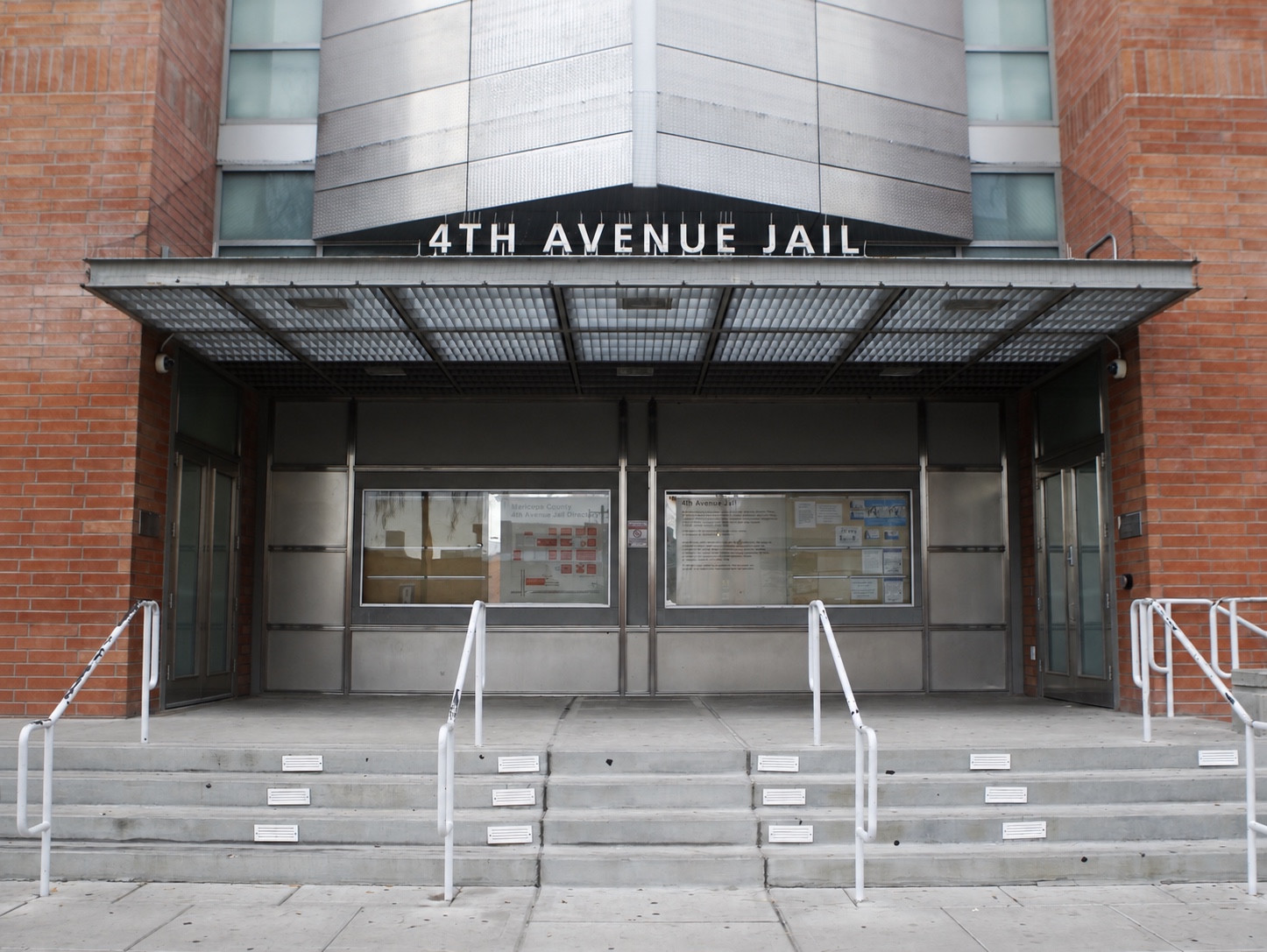
The court lists in-person bond payments at the Fourth Avenue Jail Bond and Fine Room, 201 S. 4th Avenue, Phoenix, at the building’s northwest corner. Confirm accepted payment methods before going. A commissary deposit does not post bond. Use the court’s bond instructions, and do not send a supposed court bond payment through Zelle, Venmo or a similar app.
The Maricopa County Superior Court says release processing may take up to 24 hours after bond is paid. Paying the bond starts a process; it does not establish an exact pickup time. Another case, warrant or agency hold may prevent release on that bond alone.
If the wait seems unusually long, call 602-876-0322 with the booking number and payment information. Ask whether release is being processed or whether another hold needs attention. Your attorney can help identify the legal issue behind a continued detention.
Maricopa County processes releases through the Intake, Transfer and Release facility, or ITR, at 2670 S. 28th Drive, Phoenix, AZ 85009. This is a different location from the Fourth Avenue bond-payment window.
Confirm the release status and pickup instructions with MCSO before leaving, then follow the designated public-parking signs. Review the court’s ITR location page for directions. Keep your phone available so your loved one can reach you when ready.

Yes. A lawyer can review why someone remains in custody and determine whether to request a lower bond or different release conditions. Under Arizona’s rules, inability to afford the bond can support a request for review. A clear plan for housing, transportation, work and any needed treatment can help the attorney present the request.
The judge considers the circumstances of the case, safety and the person’s likelihood of returning to court. Our Phoenix criminal defense practice can help you understand the available options and prepare a release proposal tailored to your loved one.
Check the paperwork for the court name and case number, then search that court’s records. Being held in a Maricopa County jail does not mean every case is in Superior Court.
Use the Superior Court criminal case search or Maricopa County Justice Courts case search, as appropriate. For a city-court case, contact that municipal court. Confirm the date, time, location and appearance requirements with the attorney or court, particularly after a hearing changes.
For non-emergency concerns, contact Correctional Health Services at 602-506-5240 or use its Clinical Liaison form. Provide the name, booking number, medications and dosages, prescribing provider, and the specific concern. Encourage your loved one to tell medical staff about those needs, too.
The liaison service handles messages during regular weekday business hours. For an urgent safety concern, including a risk of self-harm, call MCSO immediately at 602-876-0322 and clearly explain the urgency. Notify the attorney as well. Families can supply information even when privacy rules limit what medical staff can disclose in return.
Ask your loved one to request a property release naming you as the recipient. Confirm approval, the pickup location and hours before going, and bring a valid government-issued photo ID. MCSO generally requires release of the booked personal property together, except clothing, rather than allowing individual items to be selected.
Property held as evidence by the arresting agency uses a separate process. Check MCSO family information or call 602-876-0322 to find out who has the item and how to retrieve it.
For a court-ordered Maricopa County jail sentence, follow your confinement order and report to ITR, 2670 S. 28th Drive, Phoenix, at the required time. Bring the actual confinement order and government-issued photo ID. Review MCSO’s self-surrender instructions for prescriptions in their original containers, necessary medical devices and permitted belongings. Ask whether your sentence or program requires a completed healthcare certification form.
If you cannot report as ordered, contact your attorney promptly so a change can be requested from the court. A request alone does not change the deadline; the court must approve it.
Treat ordinary jail calls, visits and messages as monitored or recorded. Use them for encouragement and practical arrangements. Save discussion of the incident, witnesses, evidence and defense strategy for a private attorney conversation. The county’s guidance for people facing charges specifically cautions against discussing the case on personal jail calls.
Ask the lawyer to arrange an approved confidential legal call or visit and confirm the proper account or telephone setup. Adding a lawyer to an ordinary family call does not automatically make it private. Follow any court order restricting contact, including contact through other people.
You can support your loved one while an attorney works through the legal questions affecting release and the case itself. The Molina Law Group helps individuals and families in Phoenix and throughout Maricopa County understand the charges, evaluate release options and prepare a defense focused on their circumstances.
Call 602-718-1249 or contact The Molina Law Group to schedule a free consultation. Tell us your loved one’s name, where they are being held and any upcoming court date so we can help you understand the next steps.
For answers to broader questions about Arizona criminal cases, visit our Important Information page.
Supporting photo used under the Unsplash License.

The Molina Law Group focuses on Criminal Defense - Call Us Now - (602) 718-1249